Showing posts with label film review. Show all posts

4.21.2016

A Commentary on Ben Hur—Part 2

Here continues part 2 of my commentary on the 1959 classic epic film Ben Hur staring Charlton Heston. Click here for part 1.

4.19.2016

A Commentary on Ben Hur—Part 1

Ben Hur is one of the most iconic movies of all time. I recently got a library card (which I highly recommend) and started checking out classic films that I cannot currently lazily stream through Netrix or Amazon Slime. PSA: libraries are incredible resources. Support your local library! 

I began watching Ben Hur, only to realize this was too interesting not to write about. Here is my scene by seen (zing!) assessment of the film. Feel free to grab your own copy and read through the article as you watch it yourself. Every point is basically a stand alone thought. That is, I am making no attempt at a formal essay—I just logging my thoughts as I go.

Click here for Part 2 of my commentary.

3.10.2016

Film Review: "Brennan" the new film about Brennan Manning

NOTE: follow this link for my interview with David Leo Schultz, Brennan's director.

The weekend I watched Brennan the new biopic about the life of author/speaker Brennan Manning from director/writer/actor David Leo Schultz, was the same weekend we read the "Prodigal Son" passage from Luke 15 in my church. Jesus' parable of the son who squandered his inheritance through sinful and reckless living is a messy story, that ultimately is not about us at all—it is about the vast, unquenchable, and perplexing love of God. As a film, Brennan, starring Hal Alpert in the titular role, is equally as messy, centering around two real life prodigals wandering in the midst of their own journey, sometimes towards and sometimes away from the love of God.

5.13.2014

We all want to be Pagans: Reflections on the documentary "Jiro Dreams of Sushi"


There was a moment about fifteen minutes into the beautifully (and surprisingly) riveting documentary Jiro Dreams of Sushi when I realized Jiro Ono, the sushi chef at the center of the story (whom many call the best in the world) all but worshiped his beloved food: the process of selection, the preparation, the eating of his dishes, and the serving of it to his enraptured patrons. Of course he did no conscious worshiping. Instead, it was implicit in everything he did, if we call "worship" what we choose to order our entire lives around, what we devote the entirety of our passions to, or that which utterly consumes us. This is what sushi has become for Jiro. It is his great love, even to the point where he dreams about it at night (hence the film's title).

This realization led to another thought: Jiro is a pagan. That is, is a "thing" worshiper or one who worships the earth and the stuff of earth.*


His whole life was structured around the production and consumption of ONE THING, both for himself and for others. It was at once devastatingly beautiful and tragic.


The man, his story, and his restaurant were absolutely entrancing. The cinematographers did their best to ensure the beauty of Yiro's, his son's Yoshikazu's, and the rest of their team's techniques were displayed in majestic grandeur: each flick of the wrist while turning the seaweed wraps, each tenderizing massage pushed into an octopus, each stir of the egg tofu portrayed in sweeping slow motion; their precise and loving repetition matched by the accompanying classical art music (often most fittingly paired with Philip Glass). While it is impossible to take in the whole experience of Yiro's restaurant on film, it was made clear through the portrayal that the elderly Japanese man had ascended to Sistine Chapel-like heights within the cuisine world. He had become a food god.

And who wouldn't want that? Who among us--the work and preternatural talent required notwithstanding--would not want to become a god (or God) within some realm of human achievement? The unceasing recognition, the reveling in one's unsurpassed work, the knowledge that I alone have ascended this mountain, and then the pure joy and pleasure of partaking of one's own work (in his case eating the "best" sushi in the world). What I mean to say is, we all want to make the thing the Thing and ourselves the god and supreme ruler of that thing. This is paganism. To be lost in the thing-ness of things, immersed in materials to the core of their and our being, to worship the earth.


But isn't this the misstep the Ten Commandments tries to protect us against: that we are to instead worship the One who made the earth, to be lost in the wonder of God because that wonder supersedes, pervades, and transcends all earthly pleasures, the one being or thing actually worthy of worship? And to be a non-pagan is not to reject our earthiness for the higher ideal of spirit alone-ness. No, to worship and partake of the God of the Ten Commandments, the God who sent his son to the earth, is to do so as fleshly creatures, spirit and body together. We experience the same depth and breadth of pleasures as we once had in our pagan-ness, but when we worship it is only directed to our God and maker. Our pleasure in the thing does not transform into worship of the thing, for we know that our God, who made heaven and earth and all the pleasures therein, revels as much as we do in our pleasures when our ultimate joy is found in him alone.


Jiro the chef will keep striving. For perfection. For the ever-greater experience of pleasure. For another rung of human achievement. Every time he rolls up another oblong ball of rice, marinades another filet of world class quality fish, or pays careful attention to the needs of every single one of his patrons, there will be a chance for him to get better. And he will do so until he dies and his eldest son can truly take over the family business. And his effort will be beautiful and wondrous, but ultimately just another pagan exercise; another Babel ascending into a scattered history.


_________________________________________________________________________________

*Other terms could work here as well: a-theistic pagan (to be more precise), secular pantheist (or pan-a-theist), non-religious neo-pagan, materialist, earth worshiper. There is however something in the word Pagan that signals to me what Jiro in fact is (though he would probably never attach it to himself) and that is why I use it here. By all accounts, that is, according to the film, Jiro appears to be a "normal"^ secular person with hints of a religious life (Shintoism, I think and perhaps Buddhism) who has devoted his whole life to his work and craft. By calling him a "Pagan" I in no way mean he is a polytheist of the Greek, Northern European, or any of the more classical derivations given to the various religions of the world, but instead am implying that (whether he knows it or not) he is a thing worshiper, that even if he acknowledges no transcendence in his work, I, as a theist, can ascribe the term to him, that indeed his work points to that which is outside himself and even outside the materials he works with, that as he devotes himself entirely to this one craft, consuming him whole, he in turn becomes a worshiper not just of those things but of Stuff itself. He therefore worships the earth.

^There is nothing normal about this extraordinary man.

__________________
Related Articles:
The Healing Power of Comedy
Jon Stewart, Stephen Colbert, and the Tragedy of Satire


12.30.2012

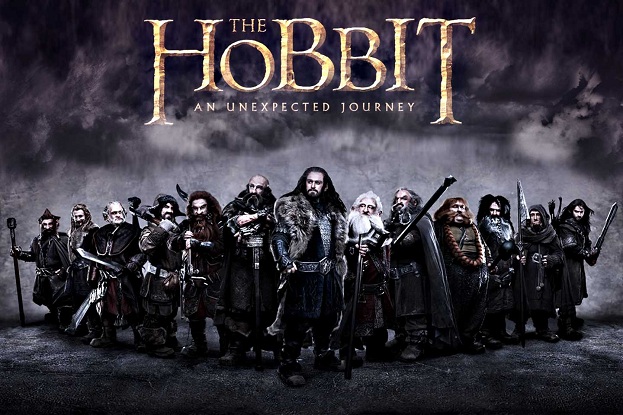
Quick Movie Review: The Hobbit: An Unexpected Journey


Is it acceptable to feel just plain old conflicted about whether or not you like a movie?

I saw the first installment of The Hobbit film trilogy today, and this is how I feel about it.  In some ways I think I like it, but in other ways it just was not that good.  Does this matter?

(please note, if you have not seen the film and do not want me to ruin it for you, you might not want to read any further)

Here are some examples of why I am conflicted:
1) For the most part I love what the filmmakers added to the film of what was not in the original book, and yet at the same time all the additions and changes do not sit well with me.  It is as if with every change they are saying to J.R.R. Tolkien, “Nice try, but we know how to build dramatic tension a little bit better, don’t you think,” or “We know what you were really trying to say here Professor Tolkien, which is why we added this and changed that.”  For example:

--I love the prologue that explains the backstory of the downfall of Thror’s (Thorin’s Grandfather) kingdom’s, I love seeing Old Bilbo, Frodo, and the Shire again, and I even love the liberty they took in gathering the White Council at Rivendell in order to discuss the rise of the Necromancer, but sometimes it seem like they were trying too hard to connect the narrative of The Hobbit to The Lord of the Rings.

--In relation to that point, I love how serious they have made The Hobbit, but at the same time I feel it is too dark.  It certainly is no longer a children’s story.

--And on top of all this I still do not understand why filmmakers see the need to change plot points (especially those that transition or develop the plot) that really add nothing to the film as a whole and usually end up detracting from the source work’s original intentions (e.g., that Bilbo and not Gandalf distracted the Trolls, how they found Rivendell, the tension between Gandalf and Thorin, Thorin’s bitterness towards the elves, that the wolves and the eagles did not talk, that Gandalf summoned the eagles and not that they came of their own volition, and especially the great anti-climactic showdown at the end between Thorin and the pale-orc Azog).

--I loved that the plot was set at a slow pace.  I felt like we were able to dwell in the scenes and get a real sense of the settings and characters, and yet the movie could easily have been 45 minutes shorter.  That being said, I found all the political stuff much more interesting and easy to follow than any of the indecipherable political gobbledygook George Lucas through into The Phantom Menace.

2) I LOVED a great number of individual performances but the movie as a whole just fell flat for me.  It was just too much spectacle.  There was too much suspended logic, too many impractical fighting and chasing and falling and hanging-off-the-edge-of-a-cliff scenes, too many false dramatic moments, too much overuse of CGI (try counting all the orcs!), that I just got sick of all the Hollywood trickery.  And dare I say, the 3-D (on IMAX too) left me with a resounding "MEH."  Next time 2-D will suffice.  

But MAN were there some great acting jobs in this movie.  
Here are my favorites in order:
1. Andy Serkis as Gollum--he's again excellent: creepy, sinister, sad, helpful, pathetic, playful, etc.
2. Martin Freeman as young Bilbo--Peter Jackson is correct in saying they could not have picked a better Bilbo.
3. Ian McKellan as Gandalf--I seriously want Ian McKellan's Gandalf to be my grandfather.
4. Ken Stott as Balin
5. James Nesbitt as Bofur (I also loved watching Nesbitt in the TV mystery series Murphy's Law)
6. Richard Armitage as Thalin
7. Barry Humphries (Dame Edna!) as the Great Goblin
8. Ian Holm and Elijah Wood and Old Bilbo and Frodo

Actually, this would be my conclusion: There is so much great acting is this movie that taken on that alone I would have to say this is an excellent movie, and yet as a whole I feel the movie does not exactly work.  It is bloated, overlong, and emotionally manipulative (that is, it is a typical Hollywood film). 

And then I have just one last thing to say: Benedict Cumberbatch!

Oh yes, and please check out this brief reflection on how Jackson and company really got the ending of The Return of the King wrong.