Showing posts with label Paul McCartney. Show all posts

1.03.2017

Fitting The Beatles' White Album Onto One Record


The task is all but impossible: reduce The Beatles' White Album down to a single disc. 

But this was the goal I set for myself and my friend Trey Mowder. We would come up with our own lists and then meet together and record a podcast episode. You can listen to our conversation here.

Or at the link: Episode 36

This article is a supplement to the episode. It lays out all our rules for selecting as well as all the aspects of the album we had to consider in the selection process. It also features our single disc song lists and Trey's unorthodox track list for those who want to read along while they listen.

A majority of this article reflects my own self-imposed "rules and regulations". That is, these are the things I thought about while whittling down my songs.

To start with, here is an opening disclaimer: 

PCR Podcast Ep36: Fitting The White Album Onto 1 LP & 2016 Year In Review


My friend Trey Mowder and I spend this episode trying to narrow down The Beatles' White Album onto a single disc (which means we have to cut out songs, as if such a thing were possible!). For reference, our full song lists and some explanations on how we made our choices can be found here: Fitting the White Album onto one record. On top of that, I also give my year end best of lists (music, TV, films, podcasts) and some highlights for PostConsumer Reports from 2016 (You can read my full end of year list here). You can listen to our previous Beatles episode here: A Commentary on the Documentary 8 Days a Week.


Subscribe to the podcast on itunes 
Check out the podcast page to subscribe on Stitcher, Tunein, and PocketCasts.

Related Beatles Articles:
Lessons Learned From the Beatles
Post Impressions #1: The Beatles Blackbird

Past Podcast Episodes
Episode 32: An Interview With Mitch McVicker

12.08.2016

PCR Podcast Ep 34: Beatles' Documentary "8 Days a Week" With Trey Mowder


This fall filmmaker Ron Howard released a new documentary Eight Days a Week on the touring years of The Beatles. Trey Mowder and I sat down and discussed what we thought of the film. Part commentary, part movie review, part love letter to the Fab Four, consider this the semi-definitive guide to the new film. 


Subscribe to the podcast on itunes 
Check out the podcast page to subscribe on Stitcher, Tunein, and PocketCasts.

Related Beatles Articles:
Lessons Learned From the Beatles
Post Impressions #1: The Beatles Blackbird

Past Podcast Episodes
Episode 32: An Interview With Mitch McVicker

6.18.2013

Post Impressions #1: The Beatles' Blackbird

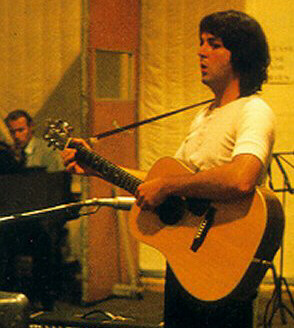
Paul McCartney and his Martin D-28, with which he recorded "Blackbird"
Post-Impressions: a series of reflections on a work of art written long after the first impression of that work has taken effect.  In fact, so many impressions of the work have passed by, the original impression has been all but forgotten or at least irretrievably altered.  

NOTE: this essay was originally published on Paul McCartney's 71st birthday.


What if this is what you saw the first time somebody ever showed you the Mona Lisa (note the mustache)?:

Or perhaps this?:


Or if this was the first time you ever heard Beethoven's 5th?:


What if our first experience with a great work of art or at least a work that has had a profound influence on us was not the original work itself but a copy, a simulacrum, a parody, or a reinterpretation?  Does our first-impression of the copy win out over the subsequent impressions gained from the original work, or will the original work eventually supersede the copy? My contention is that if the original is powerful enough the surrogate works will inevitably recede into the distances of one's memory.  But my intention is not to squander any attention of yours I might have gained by pontificating philosophical abstractions.  No, I want to tell you about a work of art that has influenced my life deeply, and to do that I have to enmesh that work within my own story...


When I was growing up we did not listen to The Beatles in my household. There were no Beatles records or CD’s or tapes. I had heard of The Beatles, had heard a few of their songs and had begun liking them, and was intrigued by their legend, but their music was mostly unattainable for me. I remember trying to listen to the local oldies radio station at just the right time in the morning—right before the bus came as I waited in our car at the bottom of the hill where we lived—so I could listen to their Breakfast With The Beatles segment. If the bus was just late enough I might get a chance to hear "Hey Jude", or "Eleanor Rigby", or "I Saw Her Standing There".  It was years before I actually bought a Beatles record.


My son, on the other hand, listens to The Beatles in the car on a regular basis and he is only four years old. His father (me) has taken the initiative to share this music with him—it has been a priority, in fact. I grew up listening primarily to what is known as Contemporary Christian Music (CCM) and even though I still like a majority of the music I grew up listening to, there is a whole lot of music I have had to be intentional in seeking out on my own—not least of which is The Beatles. Not so with my son—he will have the great musical works of Western Civilization thrust upon his ears—everything from Bach and Beethoven to Bluegrass and all of my personal pop, rock, and folk favorites. Our routine in the car is that he makes the music requests and I play DJ, changing the discs in and out according to his whims of the moment. Right now he is transfixed on Newsboys, Paul Simon, Rich Mullins, and Vampire Weekend (all excellent pop/rock/folk music in my opinion), but for a while it was The Beatles. 


In the midst of this nearly daily routine I have been struck at how different my own first impressions of The Beatles were. Everything was piecemeal. A few songs on the radio and whatever I could absorb from the torrent of material that was on the Anthology documentaries that played on TV during my youth (I remember being utterly blown away at both watching the video for and then listening to “Hello Goodbye”. I just could not believe such a song existed.). And then, sometime in high school I “heard” “Blackbird” for the first time. Actually, the odd thing was that my very first experience with it was reading sheet music for it. I was in a small sized vocal ensemble and our director (the inimitable Mr. Ron Kiesewetter, who taught me that music should be performed with both utter joy and disciplined excellence--he is in the top 2 or 3 of music influences in my life) was having us learn a choral arrangement of the song as sung by The King’s Singers . I sang tenor and therefore was made to learn the ‘g’ note droning part: “dun, du, du, du, du, dun… dun, du, du, du, du, dun… dun, du, du, du, du, dun”. If you are familiar with the original song listen carefully for that drone on the ‘g’ string of the guitar. I got to hear the song built from the ground up, with each individual vocal line taking on an aspect of McCartney’s guitar picking, and as I began to absorb the melody a very simple thought came into my mind: “this is a really good song.” I should also mention that up to this point I had no idea that this was a Beatles song. 


Over the next couple of years I became semi-obsessed with the song. Even though I had yet to hear the original version, I had a friend teach it to me on guitar (my Beatles obsessed friend Robbie who I have mentioned before in this blog), where I used my memories of singing it a capella to aid my learning. Then, a couple of years later when I was living in England for three months doing ministry I was delighted to discover one of my host families had a copy of Anthology Vol. 3, which had an alternate take of “Blackbird.” I would sit in their back sun-room where their stereo was and play the song over and over again, hoping to play it just like Paul. Little did I know that this version was arranged slightly different than the official album version.


By the time I actually got to listen to the “original” album version of “Blackbird”, I had already logged so many “Blackbird” listening and playing hours that I actually have no memory of the event. I only remember thinking, “I can’t believe they actually put a recording of birds on there—that doesn't seem right.” I was so used to all the other versions I had heard, that The White Album version became the cover version for me, and that The Beatles' use of the blackbird sounds almost seemed contrived and gimmicky, as if their version was trying to be cooler than the ‘original’ version. Now I am more used to the actual original version, but it was a strange progression from sheet music, to singing it with a choir, to playing it on guitar, to hearing alternate takes, to finally hearing the "canonical" version of the song.


A couple of years ago I was saddened upon reading an article on the AVClub where the author said he never really listened to The Beatles anymore because his parents overplayed when he was a child.  To him The Beatles' greatness was a forgone conclusion, but he could not really hear them anymore.  Their music was no longer special because it had become too familiar.

My son was introduced to "Blackbird" in a way entirely different from myself.  He had it placed right in his path as a young child by his father who was all but saying to him "This is a great song.  You will listen to it and you will like it." My introduction of the song on the other hand was something of a reduction of a reduction of the original.  I was given the scent of something whose beauty I could not help but follow all the way to the source, no matter how long it took.  Our first impressions of these songs were radically different from each other, but my hope is that in the end our shared experience will be the same. That he may never take this music for granted, that he will not come to see "Blackbird" and the other songs I play for him as merely trite “kid songs” that he has now grown out of, that these songs will endure, that they will always be magical songs, wondrous songs that take him to another place; that they will always be great songs to him. I am trying to create a bond with my son and it is through music. I want him to grow and I want to grow with him—together. This is our journey.


With all this in mind let me just say I am very thankful the video posted below was not the first time I ever heard "Blackbird".  Bobby McFerrin is a master, no doubt, but can anyone really know what is going on with this song if they had not heard the original version first?


Podcast Episode: Beatles' Documentary "8 Days a Week" With Trey Mowder

1.22.2013

Lessons Learned From the Beatles (about music, art, fame, and otherwise)


Over the past few months I have been listening to a lot Beatles' music.  As I have been re-listening to a lot of their work I have again been amazed at how excellent they were at their crafts of 1. songwriting, 2. recorded music, and 3. developing this modern idea that we call a "rock band."  As a result I have been thinking a lot about what it is that has made them so enigmatic and appealing for so long.  In some senses, I see the following statements as core values for any fledgling rock band that wants to get anywhere, but I also think there are some valuable principles that anyone in leadership (church, business, or otherwise) or the field of education can benefit from.  

So here they are, the lessons I have learned from The Beatles:
(I dedicate this post to Robbie Augspurger, the man who introduced me to the mystique and complicated history of this band and who probably loves them a hundred times more than I do)


1. Write songs in different genres. It is a strength to have songs on an album that are completely different in genre, style, and subject matter (think of the musical diversity present on Revolver and The Beatles).

2. Sell out first and then go avant garde.  Essentially (after plunking away for years as a bar band) The Beatles joined the record company system, became a very conventional band that was sellable to the masses, created brilliant but formulaic pop music that won them millions of fans, and then using the freedom afforded them by all that public good will, made daring experimental pop music.

3. Always be evolving as an artist.  Actually, this is a bit of a myth.  One could easily say that The Beatles utterly transformed themselves musically speaking in the ten years (or so) that they were a band.  However, if you look at the post-Beatles output of each of the members their songwriting did not continue to evolve at such a staggering pace but could basically be said to have plateaued.  This does not mean their songwriting was bad but only that it did not change by the same leaps and bounds as it did from say 1966-69.  All the same, one of the lasting legacies of The Beatles is this expectation that artists should always be evolving into something greater, that they should always be challenging themselves to reach new heights artistically.  This expectation is a legacy (or should I say a shadow) all of the present day ‘important’ artists have to live under.

4. In evolving as an artist take what was old and make it new.  The Beatles were not coy about revealing their influences.  They freely admitted they essentially were trying to recapture the sound of the blues, rock & roll, crooner, and vaudevillian records they listened to growing up.  So, in basically every Beatles song you will hear a musical formula that was inspired by some kind of roots music, but at the same time you will hear them add something to or put a new twist on the old formula.  In other words, their evolutions were always homages to their influences.

5. Create myths about yourselves, or create a mysterious public image for yourself, next confound the press and the public by denying that you have done so at all, and then say that anyone can believe anything they want about you but that does not make it true.  John Lennon was a pro at creating this kind of spectacle (and maybe Paul was too) and the end result of this kind of perplexing behavior is that it makes you absolutely fascinating to people, which in turn leaves them always wanting more.

6. Surprise your listeners/audience. (this is basically a combination of 1-5)

7. Make recording an art form in and of itself.  Do not merely try to capture a song onto tape—make the recording the work of art.  (Oh yeah, and make the recordings really good so you can stop touring too.)

8. Spend years and countless hours honing your craft before you try to say or do something original.  For all their craziness The Beatles were incredibly hard workers.  They slonked it out in the clubs and bars in Britain and Germany playing primarily cover tunes.  This why they are often called a "working class" or "blue-collar" band.  It was only after they had perfected their craft and learned the great works of those who had gone before them that they were able to leave their own legacy.  

9. Write lots of songs that contain peoples’ names in the title, because even though they might be referring to a specific person they end up becoming the universal anthems for multiple generations ("Hey Jude, don’t make it sad…").

10. Collaborate. Be interdependent.  Despite all their interpersonal dysfunctions The Beatles were at their best when they were each contributing to the band equally and using their own strengths.  And do not forget about the role George Martin played in it all as well (along with a number of recording engineers as well as their manager Brian Epstein).  When we think of The Beatles we tend to think of these big personalities who were distinct from each other and acted in opposition from each other, probably because we love to idolize famous people and we are drawn to the controversy more than the harmony.  But think about it: The Beatles were a group of friends who were together to accomplish an overarching common purpose: make great music. And then think about all that music: a vast vast majority of it was an interdependent group creation.  My contention is that in order to make something that is truly great we must work within a team (and I say this as someone who is entirely a lone wolf).


11. After gaining world-wide fame find a way to keep releasing the same material in different formats and ‘lost’ material every few years just to keep fans hungry. For example, the anthologies, Let it Be...Naked, and recent release of the Magical Mystery Tour film.  Now if only they would release the Let it Be film…

12. Keep it short.  Although there are some long Beatles songs they usually pack all their brilliant ideas into a quick 2-4 minutes.  They really understood the economy of time as well as their listeners’ patience.  Many times they only incorporated a certain melodic idea into a song once or twice.  (Sufjan Stevens beware! And yeah, Pink Floyd, I’m looking at you too.

13. As a rock band, even if you fail at other ventures (e.g., directing your own movie in Magical Mystery Tour or setting up your own record company and music store), no one really cares if you keep cranking out great music

14. Make art that appeals to both adults and children. Pixar animation is the king of appealing to both adults and kids for the movies, but I would say The Beatles are the kings of doing it in music. Here's how they did it: 1. be childlike but not childish (or simple but not simplistic) both lyrically and musically, 2. write catchy hooks, 3. Use lots of attention grabbing imagery in your lyrics, 4. Incorporate lots of fun sounds into your music. Many of these characteristics can be found in the songs "The Ballad of Bungalow Bill", "Piggies," "Strawberry Fields Forever," "Here Comes the Sun," "Octopus' Garden," and many more.

15. Little kids tend to like Paul’s songs the most (“Blackbird”, “Hello Goodbye”, “Lady Madonna”, “O Bla Di O Bla Da”, “Birthday”, “Penny Lane” ), George’s next (“Here Comes The Sun”, “Piggies”), and John’s songs almost not at all (as far as later period Beatles goes they are all just a bit too twisted).

16. No amount of innovation or experimentation is a replacement for good musical ideas.  Sure, experiment all you want, but will people want to listen to it again and again for years to come? (Again, Sufjan beware!)  It would seem the best way to experiment artistically is to embed it in a form that is appealing and familiar to people.  The same could be said for lyrical experimentation as well ("goo goo ga joob!"  "oh yea, well o bla di o bla da bra!").

17. Take a break and get away from it all so that you are freed up to write even more.  I would not have gone to India to sit under some guru like they did, but there was actually a lot of wisdom in taking time away from the busyness, chaos, and sadness of their lives in order to have a fresh approach when they started writing music again.

18. Leave a (relatively) short musical legacy and call it quits before the magic dies (The Rolling Stones and U2 beware!).

_____________________________________________________________________________
Other Beatles related posts:
Post Impressions #1: The Beatles Blackbird
Why Coldplay Will Never Be A Great Band
Podcast Episode: Commentary on 8 Days a Week, the new Beatles Documentary

+++

And while you're at it, check out this incredibly cruel Ringo meme (to any Ringo-lovers out there, I am truly sorry!!)
http://cdn.themetapicture.com/media/funny-The-Beatles-Ringo-Starr-Meme.jpg