
Showing posts sorted by relevance for query singing over our children. Sort by date Show all posts
Showing posts sorted by relevance for query singing over our children. Sort by date Show all posts
7.16.2013
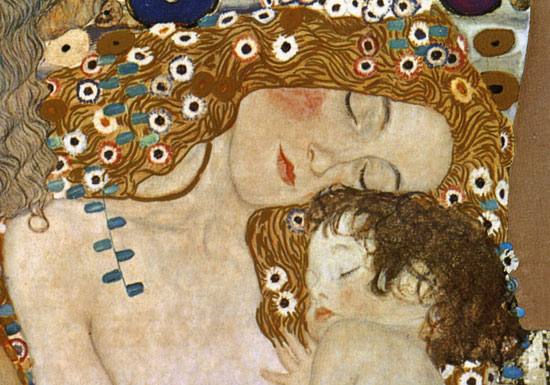
Singing Over Our Children (songs from Rich Mullins, Michael Card, and Fernando Ortega)


7.23.2013
Our Birth Story

The Birth Story: Section I: Behold All Things Are New
Never have I felt more powerless. And never have I felt of less use.
11.06.2016
Let's Not Think About the Election! Let's Listen to Music!—Songs of Hope & Peace

It's the week before the 2016 presidential election but let's pretend it's not happening. Instead, if you happen to find yourself reading this article, please take a few moments to stop what you're doing, click play on the tracks below, and take in some beauty, truth, and goodness. I have curated a play list worthy of your consideration. May they work their way into your soul, embed themselves into your mind, and stir your strength into edifying action.
Today's list (Part 2 of 3):
Songs of Hope & Peace
When the whole earth is shifting beneath our feet, when everything around us seems to be crumbling, we desperately need a sure foundation on which to stand and a refuge from the chaos. These are songs that root us in the hope of Christ, of finding peace in him through times of trouble. Allow yourself to rest in these songs, but even more than that, allow yourself to rest in God our Savior in whom all things were made and in whom we live and move and have our being. Featuring the songs of Switchfoot, Rich Mullins, Phil Keaggy, Newsboys, Matt Redman, Delirious?, and Fernando Ortega.
Let's Not Think About the Election! Let's Listen to Music!—Songs Telling the Story of God

Let's not think about the election! Let's listen to music!
It's the week before the 2016 presidential election but let's pretend it's not happening. Instead, if you happen to find yourself reading this article, please take a few moments to stop what you're doing, click play on the tracks below, and take in some beauty, truth, and goodness. I have curated a play list worthy of your consideration. May they work their way into your soul, embed themselves into your mind, and stir your strength into edifying action.
Today's list (Part 3 of 3):
Songs Telling the Story of Redemption
There is a story being told in our world that gets heard more than all the others. It is a story that makes you afraid. It tells you that if you don't do all you can you will lose everything. It is the kind of story that makes you want to win at all costs. It is a story of power and dominance and progress and accumulation. In this story we pick sides and if you aren't on my side, well, get ready to face the consequences.
But there is an alternate story being told. It is the way of Christ. It is the laying down of our lives willingly for the sake of others. Christ poured himself out and gave life to all the world. This is the story of new creation, of rebirth, of redemption. This is where justice reigns and truth finally wins. God is sovereign in this story and he has told us how the story ends. "Your mercies are new, new every morning..."
Featuring the songs of Rich Mullins, Fernando Ortega, Sara Groves Keith Green/Annie Herring, Andrew Peterson, Matt Redman, and Audrey Assad
11.01.2016
Let's Not Think About the Election! Let's Listen to Music!—Songs of Protest, Satire, & the Apocalypse

The current political season leaves bloggers like me with a dilemma. In what can only be viewed as the most polemicized election of our lifetime(s) do we even bother with bothering people about our piddly little blog posts? Personally, I have a few articles I've been working hard at for the past several weeks, but at the moment I hardly see any point in adding to the noise. I'd like my thoughts to actually get heard and considered, so why waste the effort of putting out another article when people's psyches are already over-saturated with the latest scandal or with attempting to sift through what is fact and fiction in the media's neverending truth manipulation game?
More than anything, I believe people are increasingly weary of the whole thing. We are tired of fighting each other. Tired of the lies and cover ups and conspicuous tactics of both sides. We've all been spun by the media's spin and I believe if we slow down enough we'll become horrified that often we are the ones doing the spinning ourselves. Having been spun we continue on spinning others... That is, if we are wounded as a nation, a lot of the wounds are self-inflicted...
With all this in mind, I have decided to hold off on my "important" articles for a couple of weeks (or more....We'll see where everything settles in the aftermath of the election). Instead, as a blogger, with something of a public forum for propagating the importance of art and faith in our culture, I am asking us to slow down and listen and ponder and take in some truth, beauty, and goodness. So...
Let's not think about the election! Let's listen to music!
This is a sincere call. If you happen to find yourself reading this article, please take a few moments to stop what you're doing and click play on the tracks below. I have curated a play list worthy of your consideration. May they work their way into your soul, embed themselves into your mind, and stir your strength into edifying action.
Today's list (Part 1 of 3):
Songs of Protest, Satire, & the Apocalypse
"Listen to the words of the prophet..." These are finger-pointing songs. These are songs that hurt us to our core. They catch us at our most hypocritical. At first we think they are singing about Someone Else, but if we keep on listening we come to find that no, they are singing about us too. Yes, we are culpable for the same crimes we accused others of committing. It would seem some repentance is in order.
But these are also songs that make us laugh...uncomfortably so...at the horror of it all. Sometimes a good bellyache can help us see the world differently and in seeing the world differently we begin to live differently and thus a laugh is never just a laugh. Sometimes a joke can change the world.
Today's list includes: Bob Dylan, Larry Norman, Keith Green, Randy Newman, Arcade Fire, and Steve Taylor.
2.25.2016
"I don't care if the church will sing it in 2065": Questions From Jeremiah Gibbs
 |
| Ha ha! This comic is SO funny! Even if it is basically an ignorant and unfair stereotype |
Last week I published an article calling for a discussion on what it would take to form a "Canon of Contemporary Worship Music." A canon is a measurement, a ruler, of what is best in any given field of knowledge. Within the realm of church music hymnals have traditionally functioned as their "canon". They contain a set amount of songs a committee has thought about, prayed about, sung, and eventually voted on. But it would be very difficult to create a comprehensive and fair modern day hymnal, especially one that would incorporate what is known as "contemporary" worship music. The first difficulty is our music (and even lyrics) tends to be disposable and the second difficulty is there is just too much of it out there to sift through.
My friend, Dr. Jeremiah Gibbs, had some push back for me in my search for the contemporary canon. His questions were thought provoking enough that I thought they deserved worthy answers. Jeremiah is University Chaplain and Assistant Professor of Philosophy and Religion at the University of Indianapolis. He blogs at: https://jeremiahgibbs.com/ Next month I will be featuring an interview with him on the PostConsumer Reports Podcast about his book Apologetics After Lindbeck.
7.27.2017
Ep 52: Fernando Ortega on "The Crucifixion of Jesus"

You can stream the episode below.
 |
| Crucifixion by Nikolai Ge, as mentioned by Fernando |
I have written a number of articles about Fernando over the years, including a brief interview, which you can find here:
Worship Leader Death Match!: Fernando Ortega vs. Matt Redman
Interview: Fernando Ortega on Come Down Oh Love Divine
Arriving Late to the Party #1: Fernando Ortega
Why I Listen to Fernando Ortega
Singing Over Our Children (songs from Rich Mullins, Michael Card, and Fernando Ortega)
You can stream the episode above, subscribe to the podcast on itunes or
Check out the podcast page to subscribe on Stitcher, Google Play, Tunein, and PocketCasts.
Check below for related podcast episodes and articles on worship.
7.23.2014
Teacher Training Conference Daily Blog: Day 2

Here are the talks I was challenged, inspired, convicted, and awed by today:
Lesson Planning at the Secondary
Level
Overview of The 7 Laws of Teaching
The “Why, What, How, Where, When, and
Who” of Music Education
The Imperative of Beauty and the
Creative Call
Sights and Sounds of the Grammar and Dialectic (Logic)The First Two Weeks of Grammar
12.02.2013
Music For Tough Times
In my recent post about the Central Illinois tornado that did a lot of damage on November 17 ("Where is God When a Tornado Hits?") I listed a number of resources that can help individuals and church groups work through what they are going through: a sermon, a list of Scriptures, and a list of books to read about suffering and the existence of evil.
But I left one vital part of life out: music.
But I left one vital part of life out: music.
8.03.2017
Album Review: Fernando Ortega's "The Crucifixion of Jesus"

Last week I was able to interview Fernando Ortega for the PostConsumer Reports Podcast. This week I am featuring a review of his new album The Crucifixion of Jesus, which you can order at his website: www.fernandoortega.com. You can listen to our interview here:
Subscribe to the podcast on itunes or check out the podcast page to subscribe on Stitcher, Google Play, Tunein, and PocketCasts.
You can also stream/download the album on itunes, Amazon, or Spotify.
It's been six years since Fernando Ortega last released an album, and his new work The Crucifixion of Jesus finds him creating music in mainly the same vein as he has been for the past decade. And yet this new collection finds the New Mexican singer-songwriter beginning to paint on a much larger canvas. As we have come to expect from Ortega, this album features a gorgeous collection of hymn re-tunings and spiritual songs, but Ortega is now 60 and you can tell he feels mortality weighing on his bones.
12.04.2014
"I need the darkness someone please cut the lights!": A Very Special Arcade Fire ANTI-Advent Reflection

Again Jesus spoke to them, saying, “I am the light of the world. Whoever follows me will not walk in darkness, but will have the light of life.”
+++Jesus, from the Gospel of John, chapter 8, verse 12
Statement 1: For as long as I can remember I have been awaiting Christ's second return, longing for his light to shine in our world of darkness, expecting the world's redemption, and the creation of the new heavens and the new earth.
Statement 2: For as long as I have listened to them, Arcade Fire have been singing about getting away from the light, to escape to a place where technology and the burdens of our modern age cannot find them, a place of darkness.
In other words, whereas I have lived my life in a perpetual state of advent, Arcade Fire have been living in nonstop anti-advent, thus making almost exclusively Anti-Advent music.
6.29.2016
An Album For My Wife: Commitment & Epilogue (Part 3)

This is Part 3, containing tracks 10-15 of the album, that is, the third section of the album called "Commitment" and the "Epilogue".
Here are links to the Introduction, Prologue & Infatuation (Part 1), and Infatuation (Part 2).
8.30.2011
Interview: Fernando Ortega on his new album Come Down O Love Divine

So there I was at the Fernando Ortega concert on Sunday night sitting there wondering "Now how exactly am I going to find a way to talk to him after the concert? There's a lot of people here and I'm sure he's a busy guy," when in between one of his songs he says to the audience, "There's a guy whose blog I've been reading...I'm wondering if he's here tonight. Is there a Chris Marchand here?"
Who? Lil' ole me?
You see, earlier in the day Fernando had written answers in the comments section to my previous blog post where I had posed hypothetical questions to him, questions that I never actually thought would get answered. At the end of his answers he said it would be great if we could meet after the concert. I thought that sounded great, but then there's always the difficult practicalities of making that happen. Well, Fernando made things real easy for me by calling out to me himself during his concert.
Honestly, I was very surprised. I have only just started writing this blog again and I did not think that many people were reading it, let alone the exact person I was doing the most of the writing about. He then went on to mention some of the insulting things I said about him in a previous post, regarding how as a teenager I thought his music was boring. Feeling that the audience might turn into an angry mob against me, I shouted out "I was only 17!" hoping they would have mercy upon the follies of youth.
Well, after the concert his sound man led me downstairs and my wife, my mother-in-law, and I got to meet. He was very gracious, giving us several minutes of his time, and we had a nice little chat about hymns, leading worship, Anglicanism, and how his music helped us get through the first year of our son's life.
I am not going to write a full review of the concert, but I will offer some stray observations. Also, since Fernando answered all of the questions I posed to him, I am going to repost his responses as if it were a real interview at the end of this post. His answers are great by the way. Thanks so much Fernando and thanks to Pastor Vaughn and the people of Wesley UMC for putting on the concert.
Stray Observations
+++I was struck again at how bold Fernando's music is, having the opportunity to hear it person rather than just on CD/mp3 player. Since his music is so slow and contemplative, I really think it is counter-cultural and it must require a great deal of confidence for him play it in front of people. He really challenges our tendecy to "just get on with things!" expanding through music our understanding of time, causing us to enter into a worship of contemplation unconcerned with getting through to the end, encouraging us to stay in a moment and to dwell in God's presence. The first song he played during the concert was "Kyrie I," which consists of the Greek lyrics for "Lord have mercy, Christ have mercy" which are repeated numerous times throughout its four plus minutes. I am not sure if the audience knew what he was doing by having us sing this ancient prayer that way, but to me it was clear he was inviting us to slow down, quiet ourselves, and open our hearts to God. The music of the Taize community has been doing this for decades, but is there anyone else in the contemporary worship vein who is making music and leading worship this way?
+++Those who have been to a Fernando concert before probably already know this, but man that guy is funny! Most of his music does not reveal his sense of humor, so I was really surprised at his between song banter. He is a really great storyteller and he had the audience laughing numerous times. I wish I could have a recording of it.
+++Wesley UMC was a really inviting place and it felt not like they were merely putting on a concert but that they had invited back a cherished friend to their congregation whom they wanted to share with the community. The concert organizer (a member of the church whose name I cannot remember) really had a deep connection to Fernando's music and it felt like he had brought him here to actually minister to people.
+++I was made aware that Fernando has written quite a few "singer songwriter" type songs. I already knew this, but I have been mainly paying attention to his hymns and sacred songs. I realize now I am going to have to spend some time discovering this part of his catalogue as well.
And finally, here's the interview:
PostConsumer Reports: The choral pieces on your new album sound great. At times they sound a little like the work of contemporary choral composer Morten Lauridsen. I’m wondering if he’s been an influence on you at all.
Fernando Ortega: Lauridsen's Lux Aeterna is one of my favorite pieces ever written. I've often listed it among my "desert island" CDs (The recording with Salamunovich and Los Angeles). Good ear, Chris.
PCR: In line with the first question, as far as I know you’ve never included choral pieces on an album of yours before. Have you just recently started writing for vocal ensembles since you are in a new context as a music leader in an Anglican church or do you have a bunch of choral works just waiting to be performed? Also, out of curiosity, are you using any of the modes as a tonal base in any of them; at times they remind me of the setting of the Psalms in the Plainsong Psalter?
FO: This is my first real attempt at writing choral music. I've done a couple of things for my church, but not nearly as involved as these pieces. I would love to explore it further. If there are modal tonalities in any of the choral pieces, it's purely by accident. I didn't set out to write in any particular mode.
PCR: How intentional are you in making your music slow in tempo and contemplative in tone? I’m thinking especially of pieces like “Grace and Peace” off of Shadow of Your Wings and “Kyrie 1” off of Come Down? In composing pieces like this are you deliberately intending to slow down the listener or the worshipper as they open his or her hearts to God or did you compose them that way simply because that’s what you like and that’s the particular song that came out in the moment?
FO: These days, everything I write comes out slow. I don't know why. For awhile, when I was traveling with a band, I used to work hard at writing faster, more punchy songs. A few of them work pretty well, but for the most part, when I try to sing other stuff, I sound contrived. My most successful work (IMO) along those lines are on my self-titled record.
PCR: I find much of your music very easy to sing. I pick up on the melodies quickly and yet they are melodies that endure. In composing your own sacred songs or in arranging older hymns, how much do you think about the needs of congregations who might potentially sing your songs?
FO: The congregation is very much on my mind when I write specifically worship songs - the key, the range, the accessibility of the song. I'm not prolific at this stuff yet, but I hope to be.
PCR: In the congregation where you lead the music do you often have them sing some of your own songs, like “Sing to Jesus” or “Come and Worship”? It’s one thing to sing your own songs during a concert, but do you at all feel self-conscious about having them sing your own music, as if it would be vain to have a congregation sing something you’ve written yourself? Also, do you typically “roadtest” songs before a congregation first?
FO: We sing several of the songs I've written at my church. I don't feel as self-conscious at my home church as I do when I'm visiting another church and they sing one of my songs. I don't think of it as a vain thing to do. Many famous guys did it throughout history when they were called to be the choral master in a given church - Bach, Purcell, Vivaldi, Hayden, Handel - etc.
PCR: I noticed in the liner notes that you did not site the original hymn “Just as I Am” as a source. Is there a reason you left that out?
In retrospect, I should have cited the original hymn Just As I Am as a partial lyric source for my new song. I'll try to correct that on the next printing.
PCR: A number of the songs on your new album are pulled directly out of the liturgy, which means that in an Anglican setting they would be sung at specific times during the liturgy and not just during a long worship set as in a lot of Evangelical churches. Were your compositions written out of necessity for your position at the church you work at or did you just like the texts and wanted to set them to music? Also what can you tell us about how your perspectives on worship and singing has changed since becoming Anglican, something you addressed in a recent blog post?
FO: Yes - all the Anglican songs were written out of necessity for our congregation, or by the request of our rector. Anglicanism has really influenced the way I think about worship music in that (like any other liturgical denomination) it follows the church calendar. The entire order for worship each year is guided by the narrative of Christ's life (as you know, being Anglican yourself). To be more specific, if I am writing a song for lent, I am very cognizant of the overall tone of lent, which is a penitential season. Advent, which is also considered penitential has a different kind of hopefulness to it, or a sense of anticipation, combined with a sense of longing. Those things affect the way we pray and carry on our devotional life at home as well.
PCR: Over the years you have been on a number of different record labels. Your new label is partly owned by Sandi Patty. What can you tell us about your new label, why you had to switch labels, and how being with a different label affects how your music is distributed, marketed, and even recorded?
FO: I'm not really signed to Sandy's label. She has just graciously agreed to be the means by which the record gets manufactured, distributed, and accounted for. Stylos Records is doing an amazing job so far and the people there are terrific.
This record was funded entirely by a wonderful group of investors, mostly friends I've know for a long time. I guess that would (sort of) make me an indie artist. Ha. The music should have become automatically more edgy and hard. Instead, it got even more mellow.
PCR: Could I have the sheet music for “Kyrie I,” “Trisagion,” and “Aaron’s Blessing”? Pretty please? Thanks!
FO: I'll work on the sheet music thing for you. Maybe we can connect at tonight's concert. I'm glad you're coming. It's been a blast reading your blog but I only figured out today how to respond. When I logged on, I was surprised to find this list of questions. You've made me laugh several times - and my friends as well. Now, you've exhausted me with this interview so I'm going to head to Chipotle to get some lunch before the concert tonight. God bless you Chris, and thanks for all the excellent press. I look forward to swapping worship leader ideas with you.
__________________________________________________________
Other Fernando Ortega Articles:
Worship Leader Death Match!: Fernando Ortega vs. Matt Redman
Why I Listen to Fernando Ortega
Singing Over Our Children (songs from Rich Mullins, Michael Card, and Fernando Ortega)
8.02.2011
Arriving Late to the Party (Item #1): Fernando Ortega

The beginning of a regular series here at PostConsumer Reports wherein I reflect on something that I either totally missed or completely disliked the first time I heard, watched, and/or read it. In a sense, the party’s been going on for quite some time and I have arrived significantly late. If you will, it is the AfterParty or the PostParty Party.
Since high school I have been dealing with what might be called an acute case of Rich Mullins Baggage Syndrome along with a chronic bout of Keith Green Shortsightedness. Basically it has resulted in my tendency to think that any musician that wants to sing about the Christian faith needs to have either a charismatic or provocative personality and whose lyrics need to be deeply thought provoking. Their songs need to either be in your face with their message (like this) or blow your little teenage mind, thus changing your world forever (like this). This has resulted in my inability to appreciate artists of another ilk. My close-mindedness especially stems from Rich Mullins, whom I have been looking for a replacement for since his death in 1997, unfairly critiquing each new “Christian” album that comes out under the guise of the question, “Would Rich Mullins have done things this way?” Derek Webb, Andrew Peterson, Chris Rice, and Bebo Norman are some of the artists who I had hoped would become his replacement but have not quite made the cut (I have high standards!).
10.20.2012
Is "Call the Midwife" the Most Countercultural Show on TV?

It brings me great joy when my wife and I can find a television show that we both enjoy and can watch together. I tend to go for darker or more out-there fare, with British comedy being my absolute favorite (think The Prisoner, Louie, The Office [British version], or The Fast Show). She tends to go for more relationship oriented comedy/dramas, classic TV, standard crime procedurals, or practical minded reality TV (think Friends, The Mary Tyler Moore Show, Bones, or House Hunters). We both had a love for Seinfeld before we got married and we have enjoyed watching a number of new shows together since we got married: All Creatures Great & Small, Northern Exposure, Frasier, As Time Goes By, Freaks and Geeks, and My So-Called Life, with our latest television bonding coming from a mutual obsession with Friday Night Lights. But in the past few years since having kids we have watched very little television together.
7.02.2015
Rich Mullins and America as the Promised Land

I usually have very little to say about civic holidays and devotion to the motherland, but this July 4 Rich Mullins got me thinking about my country in entirely new ways. Though I have listened to his music for most of my life it was not until now I actually saw the particular and peculiar perspective he brought forth in his songs surrounding being a Christian in America. I offer that perspective now...
_____________________
Part 1: Psalms for America
There is this moment right in the middle of Rich Mullins' song "Calling Out Your Name" where a choir breaks in with a wordless "Woh-oh-oh-ohhhhhh!!! Woh-woh-ohh!!! Woh-oh-oh-oh-ohhh..." Prior to that Mullins has just repeated the refrain "And I hear the prairies calling out your name." Recently, while listening to the song for perhaps the 200th plus time a realization came to me: the "Woh-oh-oh" section was the song of the prairies themselves, the earth bursting forth in worship of the Lord.
6.23.2016
Association of Classical Christian Schools 2016 Conference Day 1

I brought with me Abbie Corey (Kindergarten), Gabi Michlik (2nd grade & art), and Heather Olsson (6th grade & music/choir).
This is the kind of magical place where you can meet and have a robust discussion with highly influential people in the Classical Education world and with the authors of various books. For example I was purchasing The Administrator's Handbook For Christian Schools when a gentlemen came up and asked me if I was a school administrator. I said "Yes I am," and the bookstore clerk running my credit card said "Oh, that's Dr. Stephenson—he wrote the book." After I bought my books I went over and had a nice 3 minute talk with him.
 |
| It's blurry, but this is The Getty's performing. |
But there are other famous people here as well.
8.09.2011
Worship Leader Death Match!: Fernando Ortega vs. Matt Redman

Let’s be clear from the start: I am the one who has changed.
I recently purchased two worship music recordings, Fernando Ortega’s Come Down O Love Divine and Matt Redman’s 10,000 Reasons, and I have been listening to them both pretty solidly for the last week. After a week’s worth of reflection I am pretty sure one of the recordings will become part of my life’s soundtrack and the other one has a few decent songs on it that I might have a congregation sing but will most likely be forgotten in a few years.
So before I start talking about the music specifically, let’s go over my criteria for what makes good worship music. It is a pretty short list:
1. The music needs to strike a delicate balance between singability (accessibility) and innovation. In other words, does it have a melody people can sing (relatively) easily, but does the music also sound “fresh” or is it breaking any new ground?
2. The words also need to find a balance between accessibility, theological depth, and poetic creativity. So, when singing the words of a song can a “normal” person get the general ideas of the song but will they also be challenged to think of God at a deeper level hopefully with the aid of striking poetic imagery?
In essence, worship music needs to very delicately land in the paradoxical balance between being accessible and being challenging. Much much more could be said about these criteria, but this the essence of what I am looking for.
Starting with Redman’s album, I must first say that he has been my favorite worship leader for over ten years now. This means that more than any other songwriting worship leader there are more songs of his that I would want to teach a congregation floating around in my head at any given moment, and he is the one who has most consistently led me into actual worship (rather than passive listening) while listening to his music. I think his lyrics have typically had the most theological depth and their subject matter the most breadth. I always eagerly look forward to a new Matt Redman record and this current release was no different. However, his new album falls prey to a disheartening trend that has always been present in his music, but is most prominent on all his releases from 2002's Where Angels Fear to Tread onwards (excepting of course his excellent first live album, 2004's Facedown). One way I can describe this trend is that it is homogenized (or bland) music produced to meet the needs of family friendly Christian radio. Another way I can put it is that it represents the Hillsong-ization of worship music, which essentially uses second rate U2 guitarisms and shallow lyrics as a way of appealing to youth groups.
Now, if this trend is in fact infecting Redman’s music, I still think he, along with Mr. Worship himself Chris Tomlin, is among the best at still actually getting us to sing to God in new and exciting ways, despite the increasingly limited scope that contemporary worship music is allowed to operate within these days. However, in the past five years Redman’s music and lyrics have basically lost the punch that they had during the making of his first few albums, including The Friendship and the Fear, The Heart of Worship, and The Father’s Song. I do not if there is a direct correlation, but all of these early albums were recorded in England and produced by Andy Piercy and the music and lyrics subsequently contain a sonic and thematic diversity that I still believe sound fresh today.
So with this in mind, here is my biggest complaint which deals directly with this new record: almost all of the songs sound like they want to be big stadium anthems and almost all of them contain oversized bridges just asking to be screamed by youth group kids. As a result, everything kind of starts sounding the same. Now again, I think Redman is pretty good at doing these kinds of worship songs, but it is really hard for me to keep my interest up over the course of an 11 song album. On top of this, there is nothing here thematically that Redman has not touched on before and he did it better in the past than he does here. For example, the song “Never Once” from 10,000 Reasons has very similar themes to “Never Let Go” from Beautiful News (and about two songs from 2009's We Shall Not Be Shaken), and the song “Where Would We Be” from 10,000 has similar themes to “Light of the World” from The Father’s Song, but I believe the older songs here are exponentially better. Thus main problem with the new songs is that if I have already taught my congregations the older songs and those songs are superior, why would I teach them the new songs?
All in all the album is not bad, it is just merely Meh. The songs (all of them done with co-writers) contain decent theological depth and are mostly singable. What makes me sad is that it all sounds so bland. There are three songs that (at the moment) I would think of singing with a congregation. “Here For You” would make an excellent call to worship and it even tries to get on my good side by containing elements of the Collect For Purity (an opening prayer that begins “Oh God to you all hearts are open…”). Besides this, “Holy” is a great general praise song that contains an excellent eschatologically themed final verse, and I found my self singing “10,000 Reasons (Bless the Lord)” numerous times this past week; a song I think I like so much because its melody resembles a “traditional” hymn more than anything Redman has previously written. But as I say, there is not much that interests me here or that I believe will endure, despite Redman’s obvious sincerity and heart for God.
Moving on, Fernando Ortega’s Come Down O Love Divine is a completely different story. Whereas Redman’s album was taxing my patience coming in at nearly 60 minutes, Ortega’s album barely seemed long enough at 43 minutes. Now, as I mentioned in a previous blog post, some might find this music too slow for their tastes, but I think Ortega is consciously asking us to slow down as we enter into our times of worship. The songs themselves are divided into four categories: 1. General praise songs/hymns (4 of these), 2. Liturgical songs (4 of these), 3. Choral pieces, both general praise and liturgical (3 of these), and 4. Instrumental Songs (3 of these). Now his general praise songs/hymns are pretty good and I would definitely consider using some of them in a worship service, but what has really grasped my attention (i.e., the songs I have been singing to myself this week as well as to my children) are his settings of texts that would be a part of the Sunday liturgy. “Kyrie I” and “Trisagion” are superb and I think I could sing them weekly and not get sick of them. What strikes me most about Ortega is that his music and lyrics really are not that innovative (note the above mentioned criteria) and yet they are so refreshing. The music is very simply presented and easily singable and most of the lyrical content consists of already known texts and images (e.g., “Just As I Am” and “The Good Shepherd”). His orchestration and arranging is done with considered craftsmanship but at the same time it is evident he is not trying too hard to lead us into worship, something that at times it feels like Matt Redman is doing.
But as I said in my opening sentence, I am the one who has changed. I no longer want to be revved up when I sing to God. I simply want to dwell in his presence, sing simply, and as a by-product I get revved up anyway. I am not saying Matt Redman is doing anything wrong in perpetuating his particular style of modern worship music, I am just not sure how much longer I can be a part of that crowd. I think Fernando Ortega is offering us something different with his music--it is still thoroughly modern in its instrumentation and arrangement and yet it does not bow to the narrow conventions of the prevailing U2-style of worship music. Redman seems to be trying really hard to be accessible, while Fernando simply is accessible through his quiet confidence and straightforward presentation. My hope is that as Matt Redman gets older he will drop the youth group act and learn something from a guy like Fernando Ortega.
_______________________________________
Related Posts:
5 Pieces of Advice For Matt RedmanThe 10 Best Matt Redman Songs You're (Probably) Not Singing At Your Church
Coming Late to the Party #1: Fernando Ortega
Interview: Fernando Ortega
9.08.2015
PostConsumer Culture Club #1—The Week of August 30-September 5

There is the potential I could start writing a book (Lord, open that door), I have a number of articles on worship music already written that I am going to share starting in November (whoops, I just shared one a couple of days ago), and I would really like to flex my interviewing skills and do more podcasting (I have lots of ideas...). I am also in the (slow) process of being ordained as an Anglican Priest. And so I am going to attempt putting out a weekly article that is simple for me to write but hopefully fun and informative for everyone else. I am calling it "PostConsumer Culture Club".
Here's the description:
PostConsumer Culture Club: A list of everything we at PostConsumer Reports have been digesting this week, with brief commentary. Hopefully, we can culture something good in you. Happy PostConsuming!
2.06.2020
How to Write a Book Proposal (as best I know how)

Note: this article was created as a presentation for the 2020 Business of Art conference put on by Arts Partners of Central Illinois and held at Bradley University. This is the experience I have gained in getting my own book, Celebrating the 12 Days of Christmas, accepted and published. This is the third article in a series on completing a book from proposal to publication. The other articles are:
12 Days of Christmas Book Marketing Blitz!
How to Market a Book (as best I know how)
The buildup to the proposal
In my short career as an author (depending on what you mean by short), I have written one successful and one unsuccessful book proposal. Each of them took me months and months of preparation and work and both were essentially formatted the same. With the unsuccessful book I truly played the lottery, as it was written for a specific book series (33 1/3 with Bloomsbury) and was specifically about the band Arcade Fire's album Reflektor. With around 500 submissions, my proposal made the first cut to around 80 proposals, but it did not make the final cut of being accepted for publication. Knowing there was not much of a place in the publishing world for a book like this (at least that I could see), I regrouped and attempted to figure out what kind of book I could get published.
Subscribe to:
Posts (Atom)